Saturday

DEATH OR GLORY


In the midst of a casual stroll back from the coffee shop the other day, warming my hands around my seven dollar "mocha latte", I found myself in front of Billy's Antiques, on the corner of Houston and Elizabeth - the famous one-stop shop for vintage furniture, mummified cat heads, bizarre medical implements, and antique Nazi parapernalia. While saying hello, Billy stopped and pointed at the the little skull and crossbones pin on the lapel of my pea coat (pea coats were originally called Urine Jackets when they came out, but they didn't sell). He said "Oh yea, 17th Lancers". I didn't know what he was talking about - all i knew was that the Clash had a song called "Death or Glory" and my pin said the same thing, and that was good enough for me. So i did a little research....

In 1854, after reading a newspaper article depicting recent bloody and disastrous events in Crimea, a region now known as Ukraine, Alfred Lord Tennyson was inspired to write the now legendary poem called "The Charge of the Light Brigade".

It describes the Battle of Balaklava, (not "Baklava", a delightful dessert which has caused more than a few documented scuffles) in a war fought between England and Russia, and how a misinterpreted English order to attack the Russians in a valley between two Russian-held hills sent the English Light Brigade into a maelstrom of artillery, infantry and cavalry.

The 17th Lancers were part of the Light Brigade, which included several other dragoon (meaning mounted infantry, trained in horseback and ground fighting) regiments, and totaled 603 men (there is some debate over the exact number).

Hammered from both sides, the entire Light Brigade pressed through the valley, led by Lord Cardigan (his involvement with button-up sweaters is unknown), and upon nearing the enemy at the end they accelerated into a full charge. The 17th Lancers drove through the artillery and smashed into the Russian cavalry with such impact that they were able to drive them back. They were unable to hold their position due to insufficient troops, but this impact resonated so hard, figuratively, that the Russian cavalry flatly refused to engage the 17th Lancers in battle for the remainder of the war.

The 17th lost 109 soldiers out of its 147 on this courageous but tragic day, but their heroics reaffirmed their reputation as a top class fighting machine.

Their motto was "Death or Glory", and their cap badge featured a skull with a banner underneath saying "Or Glory".


Tennyson's poem, published shortly thereafter, praised the brigade while simultaneously mourning the appalling futility of the misinterpreted command. It became hugely popular and even reached the soldiers in Crimea.

Half a league half a league,
Half a league onward,
All in the valley of Death
Rode the six hundred:
'Forward, the Light Brigade!
Charge for the guns' he said:
Into the valley of Death
Rode the six hundred.

'Forward, the Light Brigade!'
Was there a man dismay'd ?
Not tho' the soldier knew
Some one had blunder'd:
Theirs not to make reply,
Theirs not to reason why,
Theirs but to do and die,
Into the valley of Death
Rode the six hundred.

Cannon to right of them,
Cannon to left of them,
Cannon in front of them
Volley'd and thunder'd;
Storm'd at with shot and shell,
Boldly they rode and well,
Into the jaws of Death,
Into the mouth of Hell
Rode the six hundred.

Flash'd all their sabres bare,
Flash'd as they turn'd in air
Sabring the gunners there,
Charging an army while
All the world wonder'd:
Plunged in the battery-smoke
Right thro' the line they broke;
Cossack and Russian
Reel'd from the sabre-stroke,
Shatter'd and sunder'd.
Then they rode back, but not
Not the six hundred.

Cannon to right of them,
Cannon to left of them,
Cannon behind them
Volley'd and thunder'd;
Storm'd at with shot and shell,
While horse and hero fell,
They that had fought so well
Came thro' the jaws of Death,
Back from the mouth of Hell,
All that was left of them,
Left of six hundred.

When can their glory fade?
O the wild charge they made!
All the world wonder'd.
Honour the charge they made!
Honour the Light Brigade,
Noble six hundred!


Original photo of the "Valley of Death" after the battle, littered with cannonballs.


There is some speculation whether the photographer Roger Fenton added cannonballs to the first shot, or if they were simply removed in the second shot by troops in order to re-use them...

In 1983, Iron Maiden recorded "The Trooper", about this same battle..

You'll take my life but I'll take yours too
You'll fire your musket but I'll run you through
So when you're waiting for the next attack
You'd better stand there's no turning back

The bugle sounds as the charge begins
But on this battlefield no one wins
The smell of acrid smoke and horses breath
As you plunge into a certain death

The horse he sweats with fear we break to run
The mighty roar of the Russian guns
And as we race towards the human wall
The screams of pain as my comrades fall

We hurdle bodies that lay on the ground
And as the Russians fire another round
We get so near yet so far away
We won't live to fight another day

We get so close near enough to fight
When a Russian gets me in his sights
He pulls the trigger and I feel the blow
A burst of rounds takes my horse below

And as I lay there gazing at the sky
My body's numb and my throat is dry
And as I lay forgotten and alone
Without a tear I draw my parting groan


Throughout history the 17th saw action in Waterloo, the U.S. War for Independence, the Boer and Zulu Wars in Africa, also in WW1 and WW2, and they still exist today in the form of an armored regiment fighting in Iraq and Afghanistan.


Above: "Death or Glory" - in this case "Death"...


Seen here yet again, combined with Clockwork Orange references on the cover of "Teenage Warning", the Angelic Upstarts single.


-Karl Monroe

Thursday

Racerette

We Miss You Razzle!

R.I.P., December 9, 1984


Tragically, on this day in 1984, Nicholas Dingley, aka "Razzle", rock 'n' roll drummer extraordinaire, was killed in a car crash in Los Angeles, California.

We all do miss him.

Now if it seems to you that just a week ago we here at Lost At Sea NYC Magazine Worldwide (LASNYCMW) were wishing him a Happy Birthday, you're right, and while he was born on December 2nd, and then died on the 9th of December, it's important to recognize that it was a December 9th TWENTY-FOUR YEARS LATER, making him age 24, not a 7 day old infant.

*EDITORS NOTE: The editor would like to state that LAS-NYC is in no way a Razzle fan page, despite our admiration and respect for the man - it's just been a busy few days for him.

Friday

HAPPY BIRTHDAY RAZZLE!!

In keeping with this month's theme of Razzle Dazzle Camouflage, today we wish a Happy Birthday to England's Nicholas Dingley, aka "Razzle", drummer of Finland's dazzling Hanoi Rocks.

Surely now he pounds the drums in Valhalla.


December 2, 1960 - December 9, 1984

Sunday

Copy Cats

Its no secret that LAS-NYC is revered as one of the most influential Electronic Magazines on the interweb, but these latest copy-cat antics fringe on the absurd. They say imitation is the highest form of flattery but honestly does anyone have an original thought in their domes anymore?
This latest bit of "street art" on the corner of Elizabeth Street and Houston stands as a testament to LOST AT SEA NYC - always at the forefront - and it's recent amazing expose on Dazzle Camouflage, and as our resident in-house art critic Tipton Newquay pointed out, "It really ain't half bad".


photo: Turk 183

U-BOATS on HOUSTON STREET!!


Ze Germans are koming!

Saturday

GENE VINCENT, R.I.P.


D.P. Flores and I popped over the hill into Santa Clarita to visit Gene last time I was in L.A., and after a bit of light landscaping around the grave, managed to take this incredibly well lit foto with my camera, which also happens to have a built-in telephone.


Feb 11, 1935 - Oct 12, 1971


Gene Vincent We Miss You.

Friday

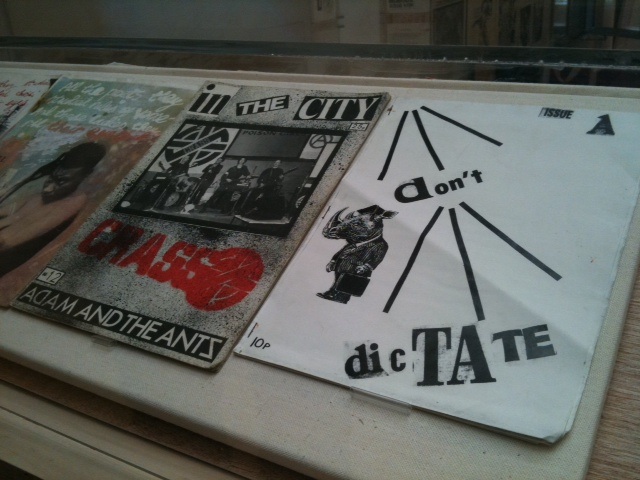
BANNED FROM THE GUGGENHEIM


AN EXHIBITION OF FANZINES PRESENTED
TO CRASS BETWEEN 1976 AND 1984,
PLUS ORIGINAL CRASS-ERA ARTWORKS BY GEE VAUCHER
AND A NEW AUDIO INSTALLATION BY PENNY RIMBAUD.


Once again the Boo-Hooray Gallery has put together a great exhibition featuring art from the punk era.
Last time it was Linder Sterling's early Xerox generated images at their old location in Chelsea, and now it's Crass, at the gallery's new spot downtown on Canal Street.
With their first blistering release in 1978, Crass was the first true anarchist punk band, and their philosophy influenced other heavyweights such as Discharge and Conflict, and resonated with hundreds of bands that followed.

The artwork they created for their albums and posters featured the now classic bold stencil print, screen prints, collages and satirical paintings, which not only made their message very clear, but also defined what then became a style, again adopted by like-minded political punk bands, and their fans.


This exhibit features posters, flyers, and a huge collection of similarly minded punk fanzines given to the band over the years - a MUST for the true anarchist, punk rocker, rebel-rocker, rock-n-roller, mini-punk, art connoiseur, arm-chair anarchist, punk, ex-punk, backpack punk, spare-changer, hippie, limousine liberal, rasta, Combat 84 fan on the fence, Falkland Islander, Argentinian, crustie (no pets allowed), skittle, Wall Street occupationist, and Sesame Street occupationist.


It runs through October 20, is open every day, 11-6pm, and is free. Dont miss it.
Check the website HERE.

Saturday

DAZZLE SHIPS

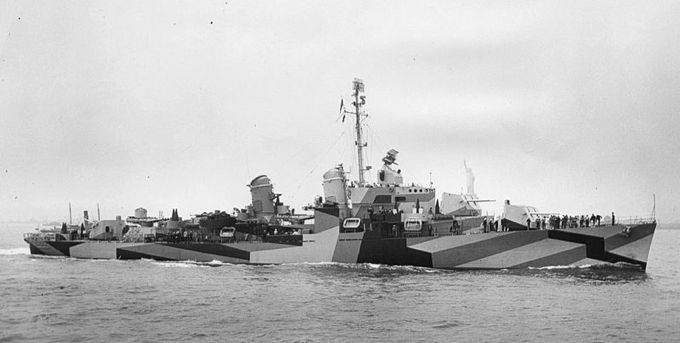
Dazzle Camouflage was first used on ships in World War One, designed to confuse and disrupt visual rangefinding, making it difficult to hit and sink a ship with artillery, which was very trendy at the time. If you've ever used an old film camera and focused until the two images line up correctly, you'll understand how this worked on old military rangefinders.

Looking back on these ships today they seem almost like massive works of art, not giant machines dodging death and destruction on the high seas...


Click on the link to listen to the song "Dazzle Ships" off of Orchestral Manoevres in the Dark's 1983 album of the same name and then scroll through the pictures for SOUND + VISION.


Tuesday

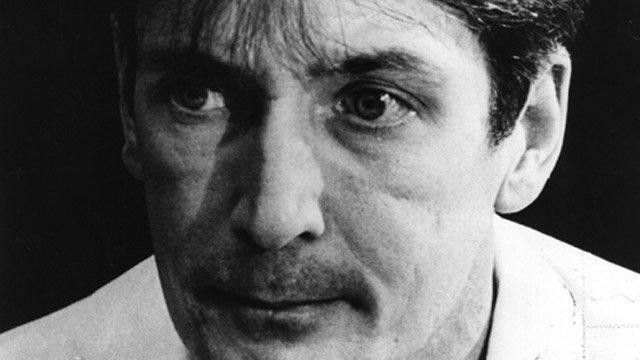
GARY GILMORE'S EYES

On a quiet evening in July of 1976, the pull of a trigger in a sleepy Utah town set forth a chain of events that would reverberate through the American legal system, human rights debate, and eventually make it's mark on popular culture here and throughout the world.

It would seem that Texan, Gary Gilmore, was doomed to his fate from an early age - victimized by some of the same circumstances that mold many innocent children into hardened criminals - an unstable home life, a nomadic existence, and an abusive, alcoholic father - he not so much spiraled into a life of crime, as much as just went with what seemed natural to him.


In a Playboy Magazine interview he had this to say:

[INTERVIEWER: Was that the point at which you just told yourself, from here on, I’m in for trouble?

GILMORE: (laughs) I always felt like I was in for trouble. I seemed to have a talent, or rather a knack, for making adults look at me a little different, different from the way they looked at other kids, like maybe bewildered, or maybe repelled.

INTERVIEWER: Repelled?

GILMORE: Just a different look, like adults aren’t supposed to look at kids.

INTERVIEWER: With hate in their eyes?

GILMORE: Beyond hate. Loathing, I’d say. I can remember one lady in Flagstaff, Arizona, a neighbor of my folks when I was three or four. She became so frustrated with rage at whatever shit I was doing that she attacked me physically with full intent of hurting me. My dad had to jump up and restrain her.]

He got an early start on his road to ruin, engaging in shoplifting and petty theft, prodigiously (he had a respectable 130 IQ) organizing a car theft ring with friends by the age of fourteen. During this period he was arrested a few times and eventually sent to Woodburn Reform School.

INTERVIEWER: How did you feel when you were released from Woodburn?

GILMORE: I came out looking for trouble. Thought that’s what you’re supposed to do. I felt slightly superior to everybody else ‘cause I’d been in reform school. I had a tough-guy complex, that sort of smart-aleck juvenile-delinquent attitude. Juvenile delinquent - remember that phrase? Sure dates me, doesn’t it? Nobody could tell me anything. I had a ducktail haircut, I smoked, drank, shot heroin, smoked weed, took speed, got into fights, chased and caught pretty little broads. The Fifties were a hell of a time to be a juvenile delinquent. I stole and robbed and gambled and went to Fats Domino and Gene Vincent dances at the local halls.]


By age 22, he had graduated to assault and armed robbery, and became the textbook recidivist offender, repeatedly caught and sent to jail. Until 1976, the longest period he had been out of jail was only 8 months.


Things escalated considerably on the 19th of July of '76. He robbed and killed a gas station attendant in Orem, Utah, and the next night did the same thing to a motel manager in nearby Provo. While getting rid of the gun he accidentally shot himself in the hand, and was then witnessed hiding the gun in some nearby bushes. He was captured shortly thereafter.

After his trial and conviction, he would be the first prisoner to be sentenced to execution in Utah since the the reinstatement of the death penalty, which had been declared unconstitutional in 1972. Even back in the 'barbaric' 1970s, this set off a firestorm of controversy, with religious and human rights groups ranging from the ACLU to the NAACP (both death penalty opponents) getting involved on Gilmore's behalf. No one was contesting his guilt, but specifically his death sentence.

In a previously unheard of twist, Gary Gilmore not only refused their assistance, but actually fought the justice system to ensure he would be executed more quickly, stating (and referring to the organizations acting on his behalf),
"They always want to get in on the act. I don't think they have ever really done anything effective in their lives. I would like them all — including that group of reverends and rabbis from Salt Lake City — to butt out. This is my life and this is my death. It's been sanctioned by the courts that I die and I accept that.".


The entire world watched with morbid curiosity, fueled by a sensational media, as he actually tried suicide twice, each attempt following a 'stay of execution' brought on by the ACLU. But the assistance/interference continued, and his final stay of execution was overturned just a mere 37 minutes before his actual death.

Execution today in Utah is only by lethal injection, but in 1976, death row inmates had a choice between it, or firing squad. Before the ban on capital punishment in 1967, Utah prisoners could choose only between firing squad or hanging.

[ FUN FACT - But before that, when Utah was still only a territory, prisoners had a third option, "beheading" - but no one chose it, and it went out of practice in 1888.]

Lethal injection usually involves a quick succession of three injections - the first renders the prisoner unconscious in a few seconds with a powerful anesthetic, the second, a muscle relaxant designed to paralyze the prisoner, stopping all muscle function including the diaphragm, causing asphyxiation. The third injection causes cardiac arrest, stopping the heart. Provided they all work as they should.

Gilmore chose the firing squad, responding when asked with, "I'd prefer to be shot".

On the day of execution, Gilmore ordered his last meal - steak, potatoes, milk, and coffee, of which he only consumed the milk and coffee (similar to more recent death row inmates, who have ordered extravagant, expensive meals and then not touched them, resulting in that particular final request being banned recently in Texas).

He was administered his last rites by the prison chaplain, and was marched before the firing squad, which was set up in an unused cannery on prison property. When asked if he had any last words he replied only with "Let's do it". A hood was placed over his head, a target attached to his t-shirt, and the five-man squad took aim and shot him from behind a canvas curtain on the cannery's loading dock.

He was the first to be executed in the US in almost ten years.

-The makeshift execution site - an old office chair with nylon restraints, and a mattress placed in front of sandbags. Various press and prison officials on the right.-


Minutes later, on that Monday of January 17, 1977, 36 year old Gary Gilmore - drifter, robber, and cold-blooded murderer - was pronounced dead by the coroner. He was also an organ donor, and that same day two people received his corneas for transplant. His body was taken to the University of Utah for research, later cremated, and his ashes placed in a plastic bread sack, spread from a small airplane by his uncle and his lawyer.

Since that day there have been over 1200 executions in the United States.


But that wasn't the end of it. Extensive international news coverage of the event, and the sheer bizarreness of it all, practically ensured that just about everyone had at least heard of what happened - including a certain Tim Smith, then living in a sleepy coastal town in Devon, England. An article he just read inspired him to write a song about an organ recipient who had just woken up, only to realize in horror that he's just received the eyes of a murderer. At this time, Tim Smith also changed his name to TV Smith, and along with his girlfriend Gaye Balsden on the bass, who changed her name to Gaye Advert, formed a punk band, and called it The Adverts.


Here's a sample of the lyrics to "Gary Gilmore's Eyes"...

"The doctors are avoiding me.
My vision is confused.
I listen to my earphones,
And I catch the evening news.
A murderer's been killed,
And he donates his sight to science.
I'm locked into a private ward.
I realise that I must be...

Looking through Gary Gilmore's eyes. (x2)

I smash the light in anger.
Push my bed against the door.
I close my lids across my eyes,
And wish to see no more.
The eye receives the messages,
And sends them to the brain.
No guarantee the stimuli must be perceived the same...

When looking through Gary Gilmore's eyes. (x2)

Gary don't need his eyes to see.
Gary and his eyes have parted company"

Watch the Top of the Pops appearance HERE.

The song became their second single, went to number 18 in the charts, and along with some Top of the Pops television appearances gained the band alot of attention. Punk wasn't much different from old guard rock n roll at the time in that it was populated mostly by men, so any pretty girl was likely to get alot of attention, and much of it was aimed at the sultry bass player, who, with her classic good looks, black hair, and black leather jacket, was hard to miss.

Gaye Advert soon became a Punk Pin-Up of sorts (PP-U), as seen in this fold-out from Record Mirror magazine...


Eventually tensions escalated within the band, as Gaye began to receive what her bandmates felt was more than her fair share of attention. Mentions in the press of "Gaye's Adverts" and reports of her heavy-handed approach to band business only contributed, and it didn't hurt that she had done some shoots for a porno magazine called "Fiesta" before joining the band.

These charming and delightful shots are featured here, for your viewing pleasure.


It wasn't long before guitarist Howard Pickup and drummer Laurie Driver left the band, ostensibly to pursue greener pastures. They were never heard from again.

Well, they were, but this version sounds better.

Thoughtfully included also For Your Viewing Pleasure (FYVP), some more Adverts Punk Knick-Knacks (APK-K).


LQQK at this Punk Dream Calendar (PDC) - NINE of the best bands in history playing at the same place within a month and half!


But let us now go back to the USA, again across Atlantic Ocean, and back again through the sands of time, but not as far, to the offices of the Wieden and Kennedy ad agency in New York City.

It was 1988, and the Nike shoe company needed something to help them compete against industry leader Reebok, who had somehow taken control of the market with their ridiculous shoes during the 80s aerobics craze. Nike needed a new angle, a new direction, a new approach. They needed something that would separate them from the competition. Wieden and Kennedy gave it to them. This was still an era when most people only wore athletic shoes while actually playing sports, and so W+K helped change Nike's entire marketing strategy (EMS) from selling "athletic footwear", to selling the shoes as fashion and lifestyle accessories. And they promoted it with the new, hugely successful "Just Do It" campaign. It appeared everywhere, in magazines, on billboards, in TV commercials, and featured the biggest sports stars of the day. It was what helped push Nike into the number one position with sales surpassing $3 billion by the early Nineties.

Little did anyone know that this iconic slogan was inspired by the last words of a cold-blooded murderer. Dan Wieden admitted as much years later in the ad industry documentary "Art & Copy" how he got the idea from Gary Gilmore's last words, giving them a slight twist, and not thinking much of the connection at the time. “None of us really paid that much attention. We thought, ‘Yeah. That’d work,’ ” he said, adding, “People started reading things into it much more than sport.”

Of course the official Nike version of the story sanitized its the slogan's genesis, claiming Wieden, speaking "admirably" of Nike's "can do" attitude, randomly said "You Nike guys, you just do it.".

It just wouldn't do to have a killer selling shoes, now would it, but to quote Ian Faith, esteemed manager of one of England's loudest bands Spinal Tap, "Death sells."

-Karl Monroe